This AI-generated translation is currently being refined.
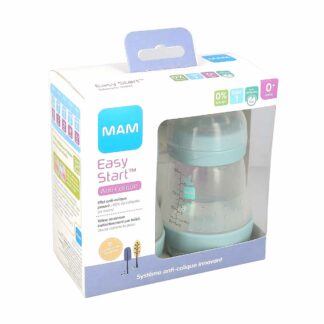
Premium bottle with unique design Age Material Bpa Free Size: 330 ml With MAM's silky-soft nipple Silk Teat - uniquely soft silicone Measuring bottle for precise dosing Good grip, easy to fill 1. GRADUATED CAP Hygienic, leak-proof, dosing 2. SILK TEAT Adopted by 94% of babies. Flattened shape to fit baby's mouth. 3. WIDE OPENING Easy filling and cleaning. 4. ERGONOMIC Easy for baby to hold.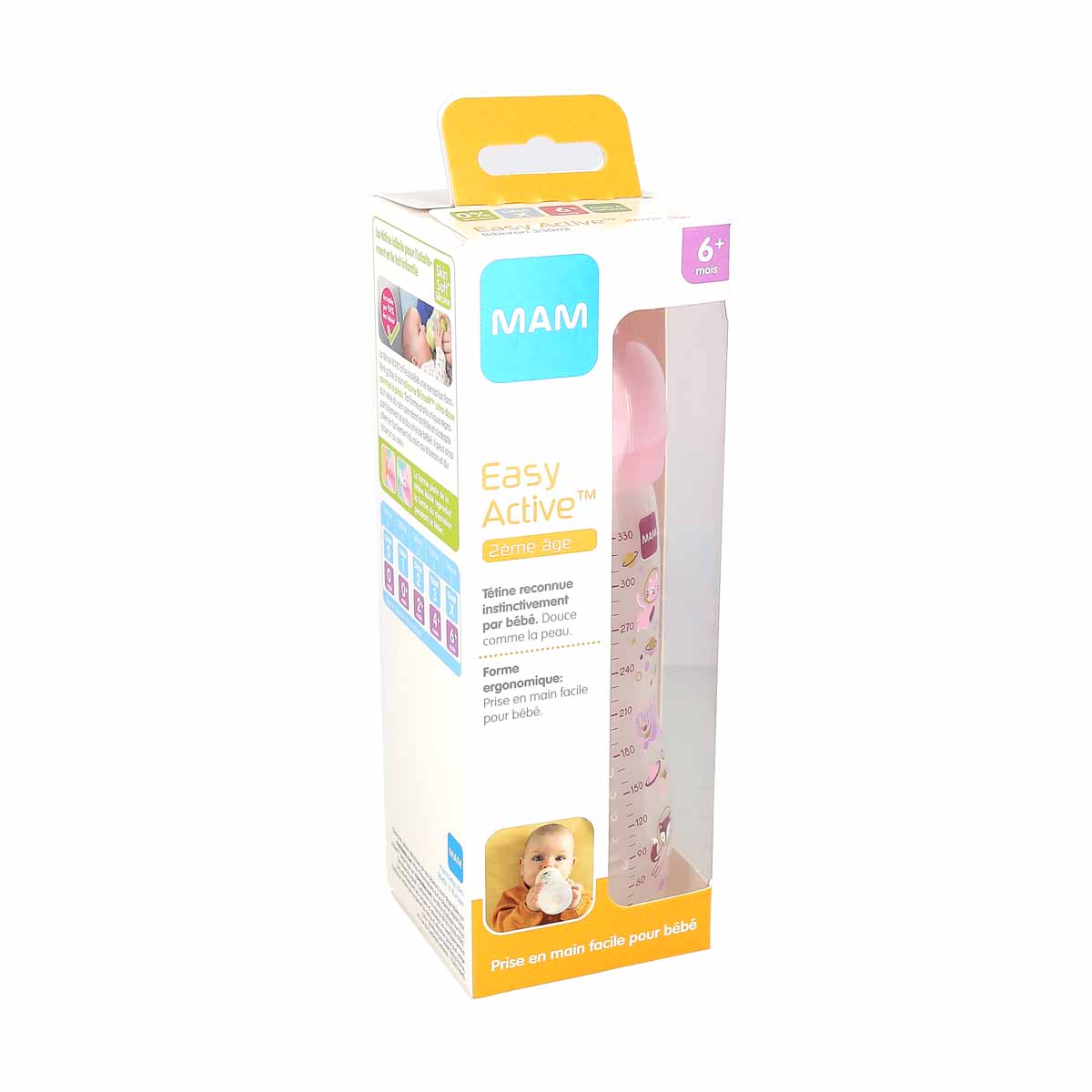
Réf : 9001616381713
MAM Easy Active Bottle 2nd age 330ml Pink
1 box of 1 bottle 330 ml
7,50€
In stock
In the first few weeks, systematic sterilization of baby bottles is recommended. As a result, glass bottles are preferable, because even if they are a little more fragile, infants will not yet be able to pick them up and break them. Doctors also advise non-breast-feeding mothers to have a set of 7 bottles at their disposal. This way, they'll always have one on hand. With sterilization, rubber teats become soft, while silicone teats - odorless and tasteless - harden and crack as they pass through the bottle sterilizer. They should therefore be replaced regularly (every month, depending on use). From 2 months onwards, variable-speed teats can be used, starting with the minimum speed, as babies are used to pulling hard on the breast: they risk drinking too quickly, and suffering digestive problems. From 6 months, it's time to switch to plastic bottles. Lighter, and above all unbreakable, they can be picked up by the child to drink alone or to play. After 4 months, sterilizing bottles is generally no longer necessary. For independent feeding, bottles with handles and training cups are the best choice.
Matière biberon Polypropylène
Matière tétine Silicone
Matière tétine Silicone